
Search Dane County Police Blotter
Dane County police blotter searches often begin with the Madison Police Department or the Dane County Sheriff's Office. If you want a report, a call for service note, or a case follow-up, start with the local office that handled the event. Madison sits at the center of the county, so city and county records often work together. For court follow-up, the Wisconsin Circuit Court Access system helps connect a blotter entry to the case file. That makes the first search quicker and the record trail much easier to follow.
Dane County Police Blotter Overview
Dane County Police Blotter Sources
Dane County records start with the office that made the report. For county calls, the sheriff's office at 115 S. Hamilton St. in Madison is the place to check first. Its records division can help with county incidents, jail records, and other local files. The office site at danesheriff.com gives the main path into that work. The Madison Police Department also serves the county's biggest city, so many blotter searches end up there as well.
The county page at Madison Police records requests shows how city staff handle report searches, releases, and follow-up questions. That page matters because a blotter line and the full report are not the same thing. A quick entry may point you to a longer file, a crash report, or a later case record in court. The local trail can move across both city and county desks.
For a visual guide to the county side, the sheriff's records path is shown in the source at danesheriff.com.
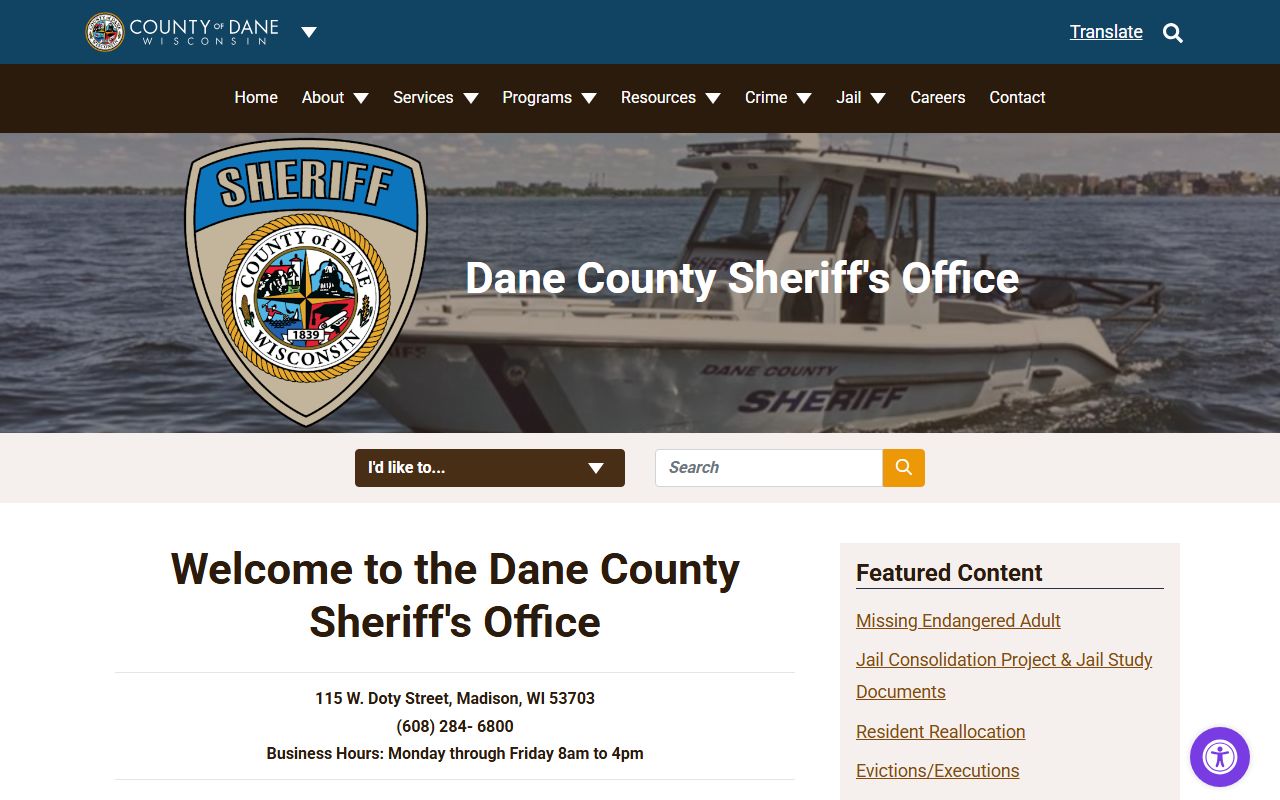
That office is the best fit when the call happened outside Madison city limits.
For city records, the Madison Police request page at cityofmadison.com/police/data-records/records-requests gives the public route into local reports.
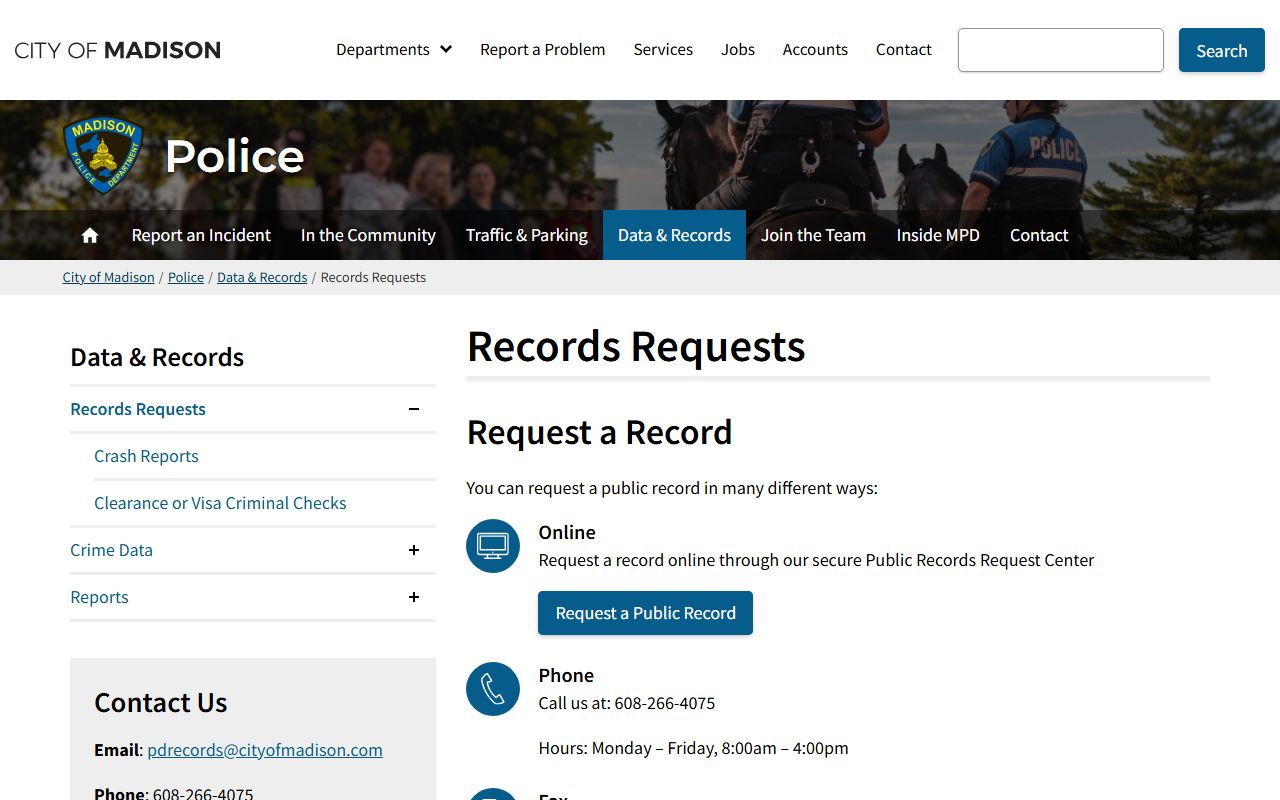
That page is often the better match for incidents in the city itself.
Madison Police Blotter Requests
Madison Police handles a very large volume of records work, so patience matters. The department says it responds to more than 25,000 public records requests each year. Simple calls for service can come back in one to two weeks, while more basic incident reports often take four to five months. Video can take five to six months, and that delay grows when the file needs redaction. If a request is small and ready at the counter, it may move much faster than a written backlog request.
You can reach the department at 211 S. Carroll St., call (608) 266-4075, fax (608) 267-1117, or email recordrequest@cityofmadison.com. The main department site at cityofmadison.com/police and the contact form at cityofmadison.com/police/contact/form are both useful when you need the right desk. Madison also keeps a city public records page at cityofmadison.com/clerk/about/public-records, which helps if your search crosses from a police report into a broader city file.
When you ask for a blotter item or report, be specific. The city staff need a clean target before they can find the right file.
- Date and time of the call
- Street address or block
- Name of a party, if known
- Report or case number, if you have it
- Whether you want the call, the full report, or both
Madison also says requests of $5 and under are not charged as of April 1, 2023. Black and white copies are $0.10 per page, color copies are $0.15 per page, CDs or DVDs are $2.50, and flash drives run from $6 to $26 depending on size. Audio and video redaction can add actual cost under 2023 Act 253, so a short file can still take time when the video needs close review.
Dane County Police Blotter and CCAP
Once a blotter entry turns into a case, the court record becomes part of the search trail. Wisconsin Circuit Court Access at wcca.wicourts.gov gives free access to case information across Wisconsin counties. It is the fastest public way to check whether a police event led to charges, a hearing, or a later disposition. That matters in Dane County because a report alone does not tell the full legal story.
The Wisconsin Court System at wicourts.gov and the Wisconsin State Law Library county guide at wilawlibrary.gov/topics/county.php help when you need the local court path, forms, or clerk contacts. If you are still trying to understand the public access rules, the Office of Open Government at doj.state.wi.us/office-open-government and its resources page at doj.state.wi.us/office-open-government/office-open-government-resources explain how Wisconsin reads its records law.
The daily arrest list has long been treated as public in Wisconsin. The decision in Newspapers, Inc. v. Breier is one of the clearest reasons why police blotter information stays in public view. The key point is simple. A blotter may be brief, but it still helps the public track what government did.
Dane County Police Blotter Fees
Wisconsin public records law puts the focus on access, but it also allows agencies to charge actual, necessary, and direct costs. That rule sits in Wis. Stat. Chapter 19, including the policy statement in 19.31, the access and fee rule in 19.35, the limits in 19.36, and the enforcement section in 19.37. In plain terms, a requester can inspect public records, but an office may recover the real cost of copying, locating, or redacting a file when the law allows it.
If a police incident is a crash, the state crash report system may be the better route. The Wisconsin Department of Transportation keeps crash reports at app.wi.gov/crashreports. That source is useful when the blotter notes an accident, but the detailed report lives in the crash database instead of the police desk. It can save time when the incident started on the road and moved into a records search later.
For harder questions about access, the public records compliance guide from the Department of Justice at doj.state.wi.us/office-open-government/office-open-government-resources explains redactions, custodians, and the balance between privacy and release. That guide fits Dane County well because local staff still work inside the same state rules. A blotter line may be public, but parts of the file can still be cut out if law or safety requires it.
Note: A short blotter entry can be public even when some pages of the full report are held back or redacted.
Search Dane County Police Blotter
If you are still looking for the right file, start with the office that handled the call, then move to WCCA if a case was filed. That order saves time. It also keeps you from asking the wrong desk for the wrong record. Dane County works best when you match the office, the date, and the type of incident before you ask for the full file.
When you are ready to compare sources, use the Madison Police records page, the county sheriff site, and the state court search together. That combination gives you the best chance of finding the blotter line, the report, and the case outcome in one pass. If the first search comes up thin, go back with a better date range or a case number and try again.