
Search Calumet County Police Blotter
Calumet County police blotter searches usually start with the sheriff and then move into court if the incident became a case. That is the shortest path when you need a report, a crash file, or a booking note tied to Chilton or another county location. The search works best when you match the office, the date, and the incident type before you ask for the full file.
Calumet County Police Blotter Overview
Calumet County Police Blotter Sources
The sheriff's office is the county anchor. Calumet County lists the office at 206 Court Street in Chilton, and the records division has its own phone and email path. The law enforcement records page at co.calumet.wi.us/340/Law-Enforcement-Records is the best place to start, and the main county site at co.calumet.wi.us helps when you need the county directory or another department contact. That is where most Calumet County police blotter searches begin when the call came from the sheriff or a county location.
Calumet County also gives you a direct email address for open records: openrecords.sheriff@calumetcounty.org. The office accepts in-person, phone, fax, and email requests, and the typical response time is about 10 business days. That is a useful baseline. It gives you a fair sense of when to check back and when to let the office work through the request queue.
The law enforcement records page is the best public starting point, and the image below links back to that source.
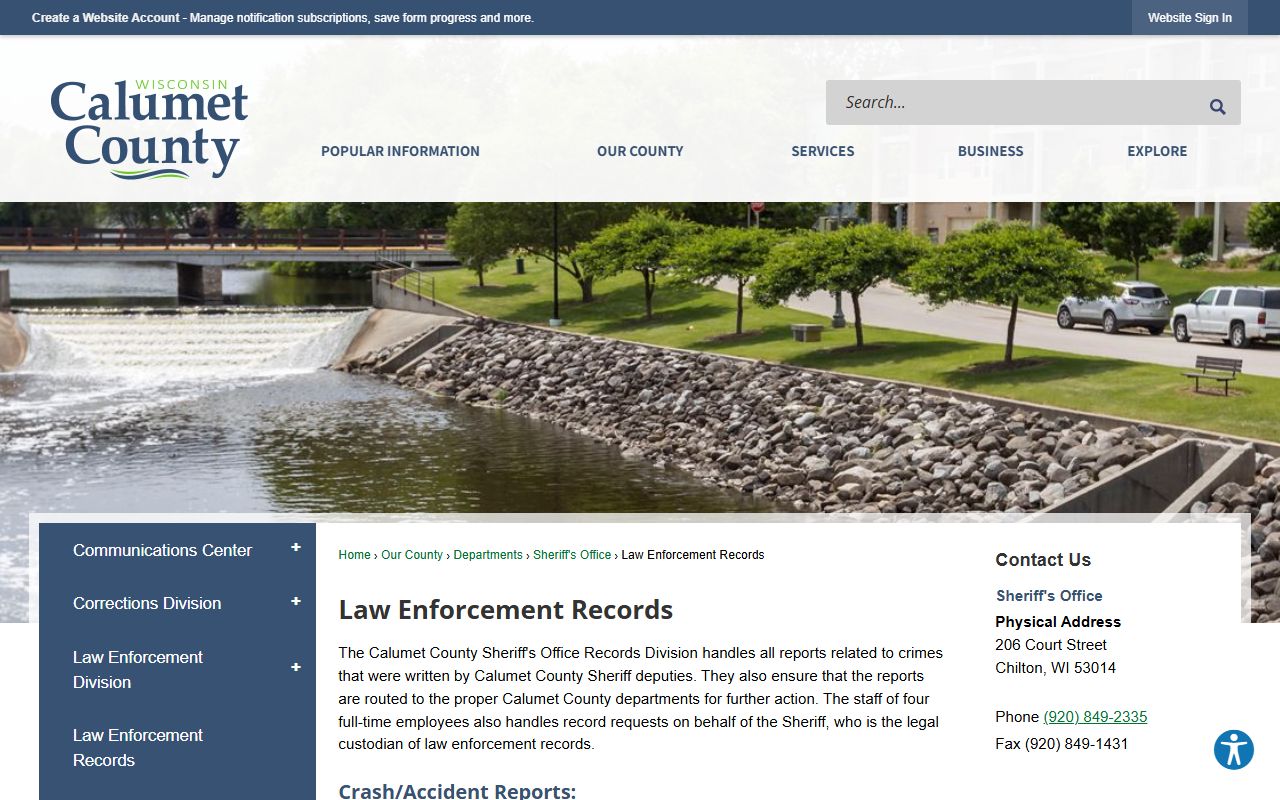
That page is the one to use when you need the request path more than the department overview.
Calumet County Police Blotter Requests
Calumet County's request process is straightforward. You can ask in person, by phone, by fax, or by email. The records division line is (920) 849-1436, and the office hours are Monday through Friday from 8:00 a.m. to 4:30 p.m. The county wants the request in the right lane the first time, so include the date, place, involved names, and any report number you already have. That helps the office decide whether the request is simple or needs more time.
Fees are also clear. The research lists a sheriff sale posting at $75 and paper service at $75, which matters when your search crosses from records into civil process. The sheriff is the legal custodian of records under Wis. Stat. 19.33, so the office controls release. That is helpful because it tells you why the same office manages both the records and the county process around them.
Use this checklist to keep the request focused:
- Date or date range
- Location or roadway
- Name of the person involved
- Report or case number, if you have it
- Whether you need a report, crash file, or civil process record
The county directory at co.calumet.wi.us/754/County-Directory is a good backup if you need another office after the initial request. The image below points to the county main site, which is the broader county contact path.
That page is a useful map when the records division is not the only office in play.
Calumet County Police Blotter and Courts
The court side matters because the blotter is only the start of the record trail. The Wisconsin Circuit Court Access portal at wcca.wicourts.gov lets you check whether a Calumet County police blotter entry became a filed case. The Wisconsin Court System at wicourts.gov gives the broader court framework and forms. That is useful when you need to verify the docket, hearing date, or outcome after the police record has been released.
The county directory and the Wisconsin State Law Library county guide at wilawlibrary.gov/topics/county.php help when you need the local office path in a hurry. Calumet County also handles civil process through the sheriff, so a records search can sometimes point you into a service or fee issue as well. That is one reason it helps to keep the request narrow and the follow-up question clear.
Crash reports are separate. If the event is a motor vehicle crash, the state crash portal at app.wi.gov/crashreports is the better route. That keeps you from asking the sheriff for a file that the state already holds. It is also the fastest way to get a report after the scene work is done.
Calumet County Public Records Law
Wisconsin's public records law starts with access and then allows the county to protect parts of a record when the law requires it. Wis. Stat. Chapter 19 includes the presumption of access, the fee rule, the limits, and the enforcement path. In Calumet County, that means the sheriff can release a blotter record while still redacting juvenile details, victim information, or sensitive investigation material.
The Department of Justice Office of Open Government at doj.state.wi.us/office-open-government and the resource page at doj.state.wi.us/office-open-government/office-open-government-resources are the best state explanations for requesters and custodians. If you want the older court reasoning behind access to arrest lists and blotter-style records, the Wisconsin Supreme Court case at law.justia.com/cases/wisconsin/supreme-court/1979/76-724-7.html is still useful background. It helps explain why a police blotter is often public even when other parts of the file are not.
Calumet County's fee rules also show why the record type matters. Some requests are simple. Others involve civil process, copying, or extended search work. The right request saves money and keeps the file moving.
Note: If a Calumet County request starts to grow, ask for the report first and the extra material second. That keeps the cost and delay under control.
Search Calumet County Police Blotter
Start with the sheriff for county incidents, then move to WCCA if the event became a case. Use the crash portal for crashes. That is the shortest route through a Calumet County police blotter search and the one most likely to get you the file you need without a lot of back-and-forth.
Because Calumet County gives you direct email, phone, fax, and in-person access, the main job is to be specific. A clean ask gets a cleaner reply. If the first response is thin, return with a tighter date range or a better location clue and let the office narrow the file again.