
Racine Police Blotter Search
Racine police blotter records are the paper trail for city calls, arrests, crashes, and follow-up work. If you need to find a report, confirm a case number, or check whether a city incident is ready for release, start with the department that handled the call. Racine is a lake city, and that matters because the city and county split the work in real ways. Some files stay with Racine Police, some move to the county court, and some only make sense after you match the date, address, and agency that saw the event first.
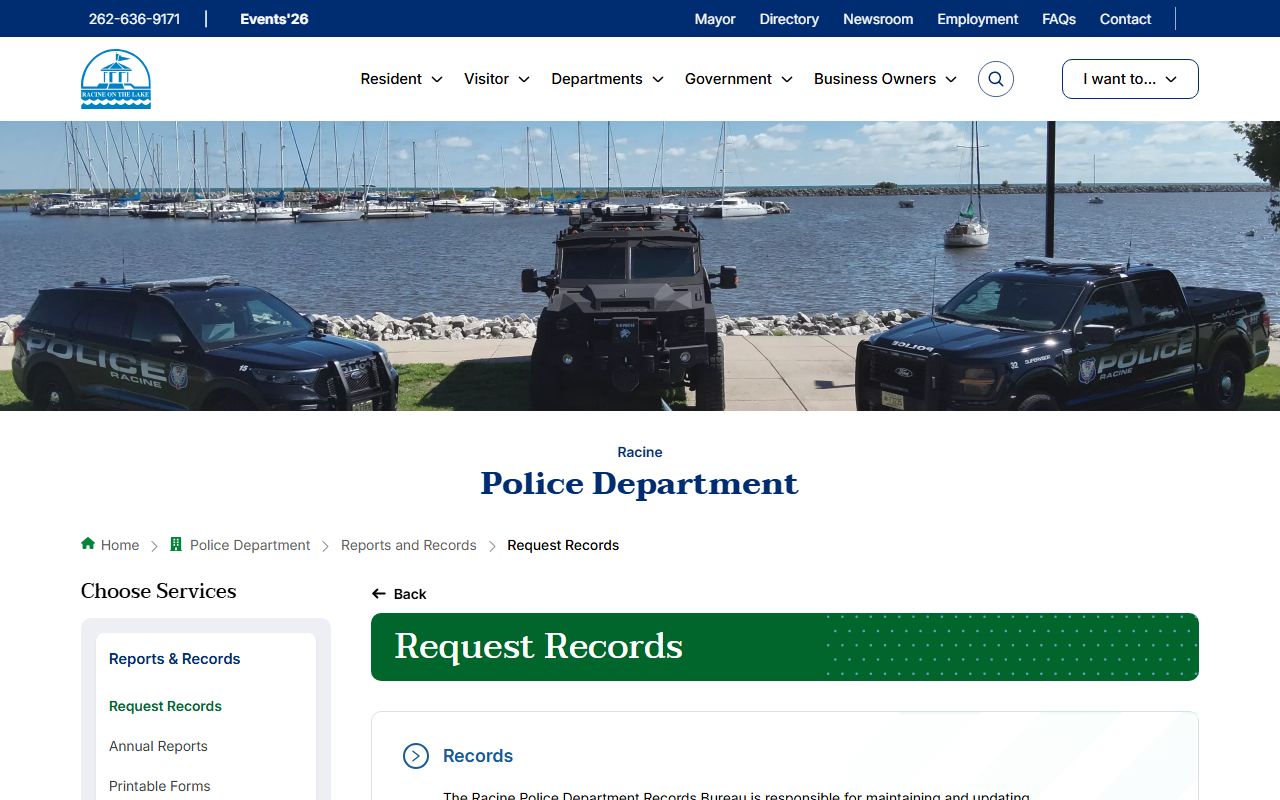
The Racine Police Records page at cityofracine.org/Police/Records is the main city path for incident reports and other police records. It is also a good place to see how the department wants requests framed, who checks them, and when staff can say whether a file is ready. If a report came from a neighborhood call, a traffic stop, or a lakefront response, this is the office to check first.
Because Racine Police and Racine County handle different pieces of the same public record trail, the source page matters as much as the report itself. One good link can save a long back-and-forth.
Racine Police Blotter Records
Racine Police keeps the city side of the blotter. The department is at 730 Center St. in Racine, and the records bureau can be reached at 262-635-7750. The office hours in the research are Monday through Friday from 8 a.m. to 5 p.m., and requests can be made in person, by phone, fax, email, or mail. The email listed for the bureau is RPDRecords.Request@cityofracine.org. That gives you a clear path for a request without guessing who holds the file.
Once a record is pulled, a supervisor reviews the release before it goes out. That helps explain why some files move fast and others need a second look. If you are asking about a crash, a citation, or a standard incident report, call first and ask whether the file is available before you drive in to pick it up. The city page at Racine Police Records is the cleanest local source for that step. It is also the right place to start if the blotter note is really a city report hiding behind a short summary line.
Racine Police Blotter Search
A good Racine police blotter search starts with the basics. Use the exact name if you have it, then add the date, the address, and the report type. If you are trying to follow the record beyond the police desk, the Wisconsin Circuit Court Access site at wcca.wicourts.gov can show whether a city arrest or citation later turned into a court case. That matters when the blotter line is brief but the legal result is not.
Search tools are stronger when you pair them with local context. The Wisconsin Court System at wicourts.gov gives you the larger court framework, and the county directory at wilawlibrary.gov/topics/county.php helps if you need to jump between a city office and a county office. If a Racine police blotter item came from the waterfront, a downtown block, or a road near the county line, that extra location clue can matter as much as a name.
When the record is a crash, the state crash site at app.wi.gov/crashreports may be faster than waiting on a paper copy. The report number, the incident date, and the last name tied to the event are the pieces that usually make the search work.
Racine Police Blotter Requests
Racine Police requests work best when they are narrow and plain. Say what happened, where it happened, and when it happened. If you already have a report number, include it. If you do not, explain the incident in a sentence or two and ask whether the record is ready. The records bureau reviews releases, so a neat request helps the staff get to the right file without extra back-and-forth. That is especially true for older incidents and reports that need a redaction pass.
The department also makes the city and county split clearer than most people expect. A city block or a lakefront call usually belongs to Racine Police, while county jail work, county property, and some outside-city incidents belong to the sheriff. If you reach the wrong desk first, do not assume the record is gone. Move the request to the right office. For county jail or county-side work, the local sheriff pages at Racine County Records Bureau and Racine County Jail Division are the better match.
Racine Fees
The Racine Police records page gives a fairly direct cost picture. Incident records cost $1.35 plus $0.25 for each additional page, and police reports are $0.25 per page. Most requests are under $5, which keeps a basic search or copy run from turning into a big bill. If you want a paper copy, ask about the page count first. If you want a faster answer, ask whether the file can be sent by the method you prefer.
That fee structure fits Wisconsin's open records law, which starts with public access and then lets an agency recover actual costs when it releases records. Under Wis. Stat. ch. 19, the office can also charge for real redaction work when the record needs it. That can matter with photos, audio, or video tied to a Racine police blotter item. The city keeps the release in the records bureau, but the law still shapes the price and the timing.
If the file becomes a certified court record instead of a police copy, the county clerk of circuit court at Racine County Clerk of Circuit Court can explain what that separate copy costs. The police record and the court record are related, but they are not the same thing.
Racine Access Limits
Racine police blotter records are public records, but public does not mean blank and untouched. Wisconsin law in Wis. Stat. § 19.31 sets the presumption of access, while Wis. Stat. § 19.36 allows limits when another law protects part of the file. Juvenile records, active investigations, and personal details often fall into that second category. That is why a request may return the report you wanted, but not every line you hoped to see.
The same pattern shows up in redacted copies. Social Security numbers, some birth dates, medical notes, and other private details are often removed. The Wisconsin Supreme Court decision Newspapers, Inc. v. Breier is still worth reading because it supports access to arrest lists and blotter style records. Even so, the law still leaves room for narrow withholding where safety, privacy, or an outside statute requires it.
If you think a denial is too broad, ask for the statutory reason in writing. Then ask whether a narrower release is possible. The Wisconsin Department of Justice office at doj.state.wi.us/office-open-government and its resources page at doj.state.wi.us/office-open-government/office-open-government-resources are helpful when you need to understand the legal line between a released file and a withheld one.
For broader state guidance, the public records statutes at Wisconsin Statutes Chapter 19 and the county legal directory at Wisconsin State Law Library county resources are good follow-up points. They do not replace the city records bureau, but they help you move from a local summary to the actual record path with less guesswork.