
Search Madison Police Blotter
Madison police blotter searches usually begin with the city police records desk, then move to the county court file if the incident became a case. That path works well for people who need a report, a call for service note, or a quick way to see whether a police event turned into a court matter. Madison also has a separate UW-Madison police process for campus incidents, so the right office matters from the start. A clean search saves time and keeps the record trail straight.
Madison Police Blotter Overview
Madison Police Blotter Sources
Madison Police keeps a detailed records page at cityofmadison.com/police/data-records/records-requests. That page matters because it points you to the request desk, the process, and the kind of files the city will release. The department sits at 211 S. Carroll St., and the main site at cityofmadison.com/police gives the broader view of how the office works. If you need to ask a question first, the contact form at cityofmadison.com/police/contact/form is a useful path.
The UW-Madison Police Department uses its own records process at uwpd.wisc.edu/data-policies-resources/records-request. Campus calls do not always sit in the city file, so the campus desk is the right place for campus incidents. Its daily blotter at uwpd.wisc.edu/daily-blotter is also worth checking when you want a fast campus snapshot. Madison and the university work side by side, but they do not keep the same records in the same way.
For a visual look at the campus records path, the UW page at uwpd.wisc.edu/data-policies-resources/records-request is the source for this local image.
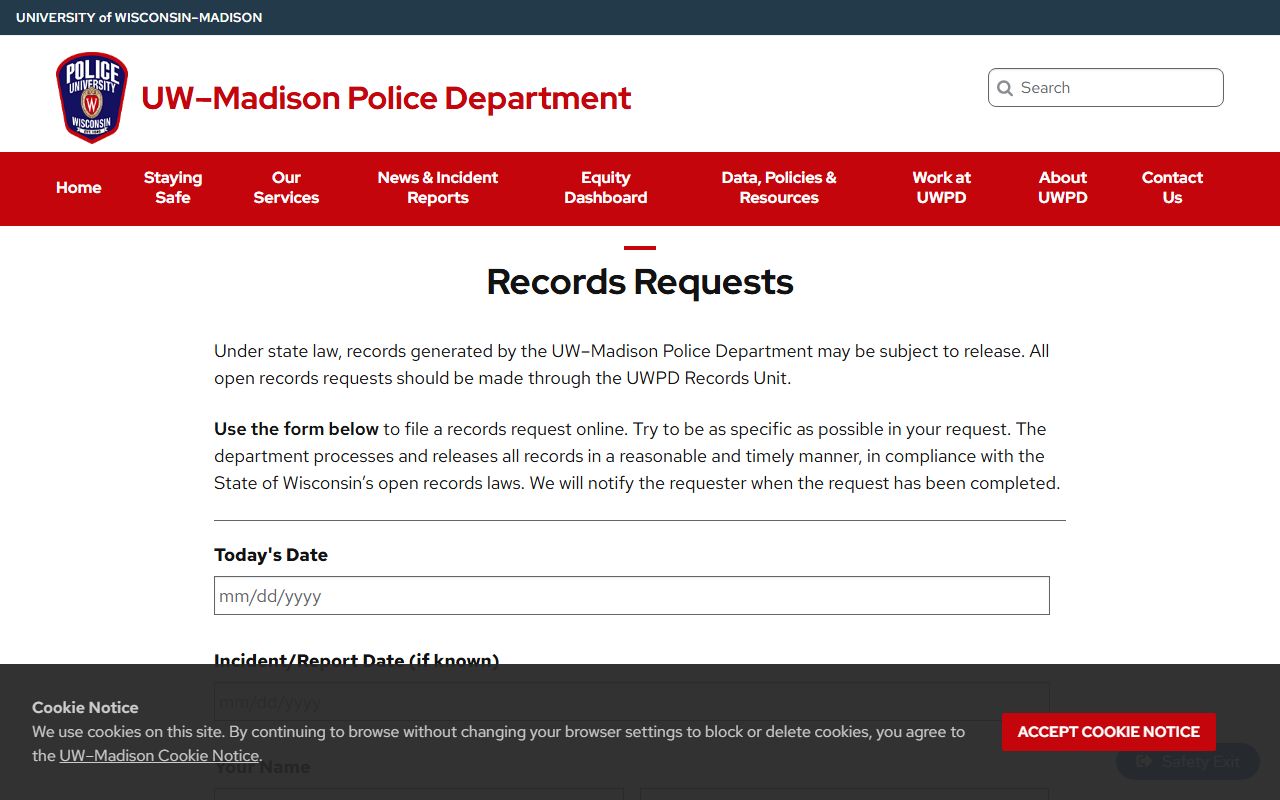
Campus incidents often start there before they ever reach a city desk.
For the county side, Dane County Sheriff's Office at danesheriff.com remains a second local source.
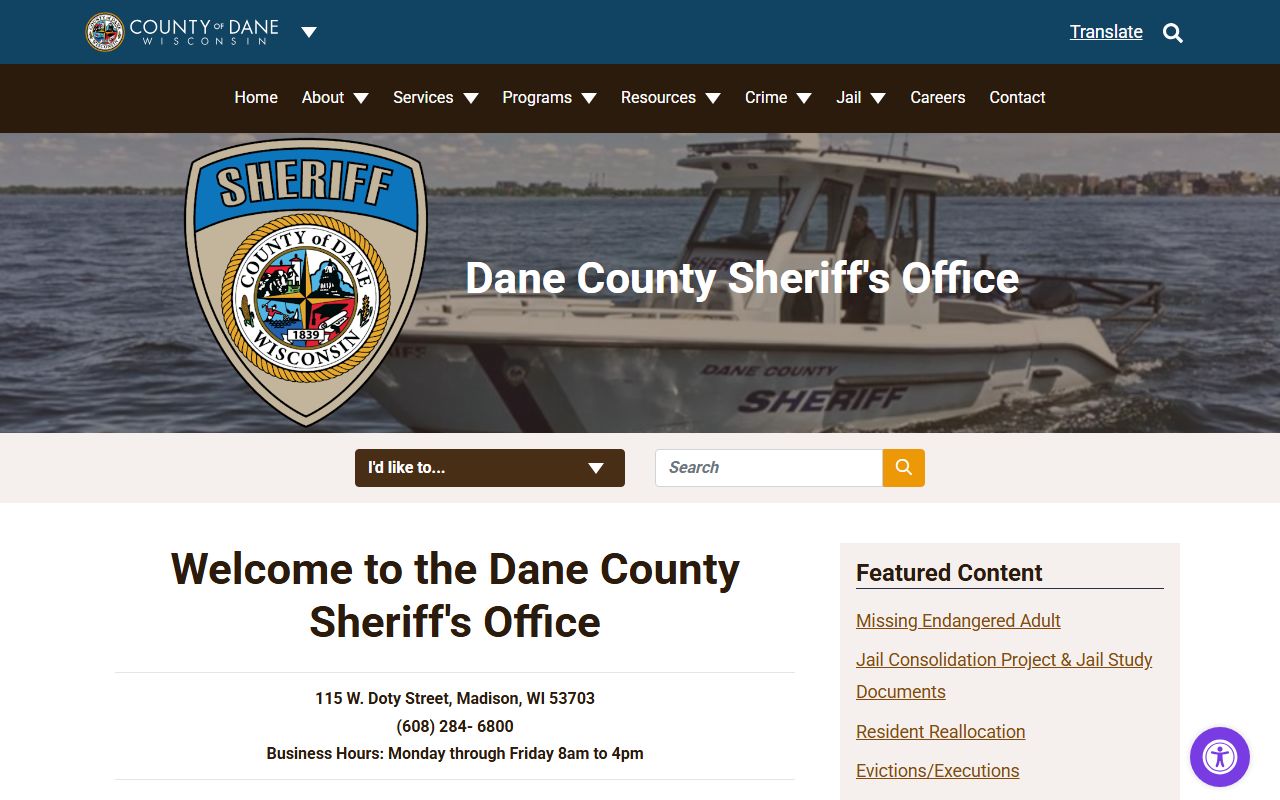
That page helps when the event happened outside the city line.
Madison Police Blotter Requests
Madison handles a lot of records traffic. The department says it processes more than 25,000 public records requests each year, so the best results come from a focused ask. Simple calls for service often turn around in one to two weeks. Basic incident reports can take four to five months. Video is slower and can stretch to five to six months. If your request needs redaction, the clock can move even more slowly because staff must review the file line by line.
Madison Police lists several ways to reach the records team. You can call (608) 266-4075, fax (608) 267-1117, email recordrequest@cityofmadison.com, or use the city form and the records page itself. The city clerk public records page at cityofmadison.com/clerk/about/public-records helps when your search reaches beyond police documents and into broader city records. That matters if a call, complaint, or follow-up note lives with another office.
When you write the request, keep it tight. Short requests move better.
- Exact or approximate date
- Street address or block
- Name of the person or business involved
- Report number, if you have one
- Type of file you want
Madison also says requests of $5 and under are not charged, effective April 1, 2023. Black and white copies are $0.10 per page, color copies are $0.15 per page, CDs or DVDs are $2.50, and flash drives run from $6 to $26. If a body camera clip or other audio or video file needs redaction, the actual cost can be charged under 2023 Act 253. That is where a small request can turn into a long review.
Madison Police Blotter and UW Records
The university is a separate layer in Madison. UW-Madison Police keeps its own records process and its own blotter pages, and that split matters if the event happened on campus or at a university building. The daily blotter at uwpd.wisc.edu/daily-blotter gives a fast read on recent activity, while the request page tells you how to ask for more. If you skip this step, you may spend time asking the city for something the campus office actually holds.
For court follow-up, Wisconsin Circuit Court Access at wcca.wicourts.gov is the next stop. It can show whether a police event became a criminal case, a traffic matter, or something else that landed in circuit court. The Wisconsin Court System at wicourts.gov and the Wisconsin State Law Library county guide at wilawlibrary.gov/topics/county.php are handy if you need the court path, not just the report path.
Dane County also has its own sheriff side at danesheriff.com. That office matters for county calls, jail records, and incidents outside the city limits. A Madison search is often a three-part job: city police, campus police, and county court. The right match saves time and cuts down on wrong requests.
Madison Police Blotter and Public Law
Wisconsin's public records law starts with a presumption of access. The policy in Wis. Stat. 19.31 says the public should get the greatest possible information about government work, and that idea carries into the rest of Chapter 19. In practice, that means police blotter material is often open, but the full file can still be redacted where the law allows it. Sections 19.35, 19.36, and 19.37 shape how staff charge for copies, limit access, and handle disputes.
That state rule set matters in Madison because request volume is high and the files vary. Some reports are quick. Others are not. The Department of Justice Office of Open Government at doj.state.wi.us/office-open-government and its resource page at doj.state.wi.us/office-open-government/office-open-government-resources explain how custodians think about releases, redactions, and fees. If you are trying to understand a delay, those pages can help.
Wisconsin courts have also treated arrest lists and blotter-style information as public in important cases. The old Newspapers, Inc. v. Breier decision still matters because it helps explain why a police blotter entry is not just a private note. It is a public record trail. That is why a clean request, sent to the right office, works better than a broad demand for everything.
Search Madison Police Blotter
If you need to go back and check the record trail, start with the city police page, then move to UW-Madison if the incident was on campus, then use WCCA if the event led to court. That order keeps the search tight. It also keeps you from waiting on the wrong file. The best Madison results usually come from a date, a place, and a clear record type.
When a blotter item ties to a crash, use the state crash report system at app.wi.gov/crashreports. When it ties to a court case, use the court search. When it stays at the police desk, use the request form. That simple split is usually the fastest way to get the record you want.